
Unleashing the Power of Object-Oriented Programming (OOP)
Introduction to Object-Oriented Programming and Its Fundamental Principles.
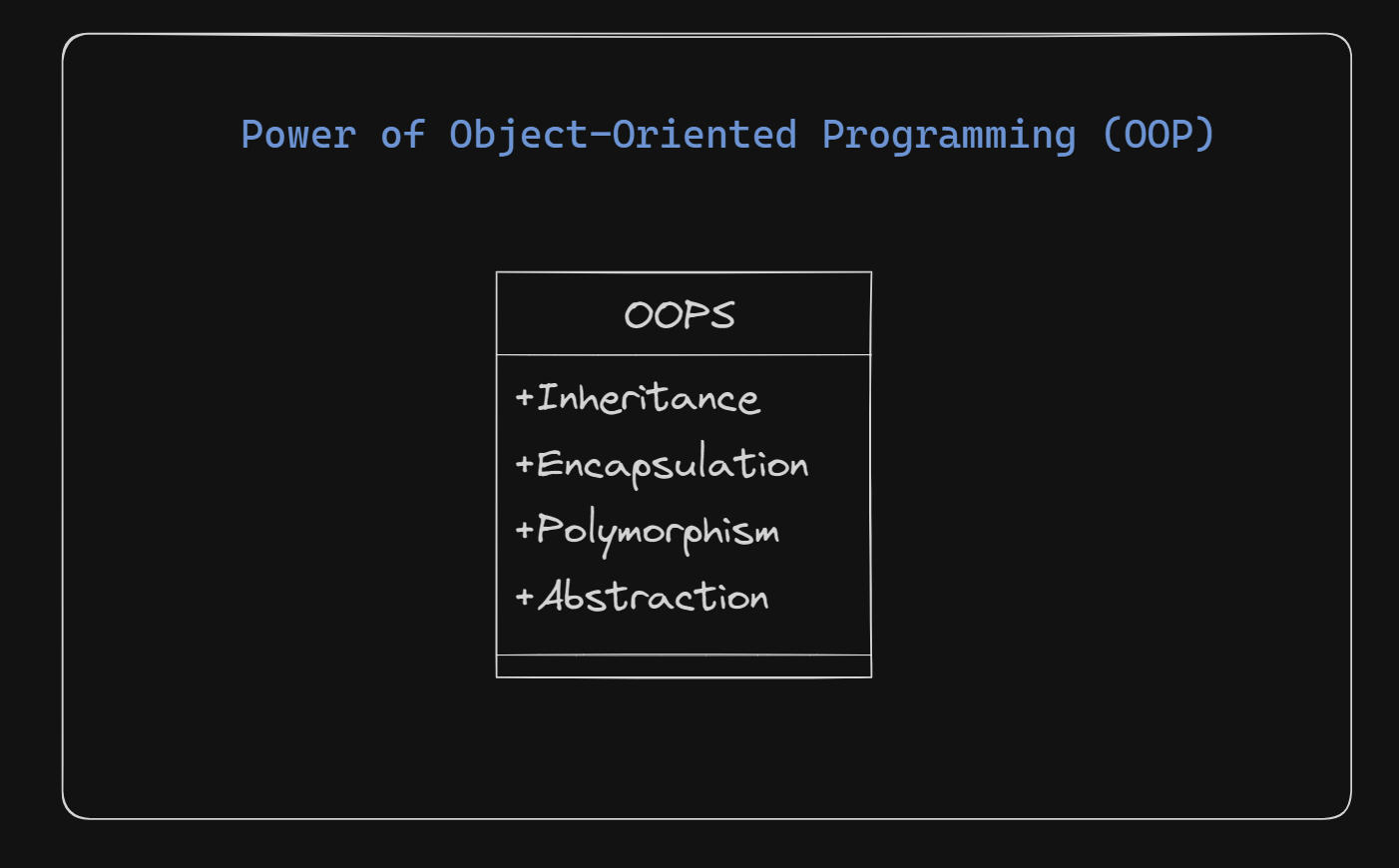
Introduction to Object-Oriented Programming (OOP)
In the realm of software engineering, Object-Oriented Programming (OOP) stands tall as a paradigm of immense power and elegance. At its core lie four fundamental principles: Inheritance, Encapsulation, Polymorphism, and Abstraction. These principles collectively provide a robust framework for crafting modular, maintainable, and scalable software systems.
- Inheritance: Empowering Hierarchical Structures
Inheritance, a cornerstone of OOP, embodies the essence of code reusability and hierarchy creation. With inheritance, a subclass can inherit attributes and methods from a superclass, fostering a structured approach to code organization.
class Animal:
    def init(self, species):
        self.species = species

    def makesound(self):
        pass  # Generic sound method

class Dog(Animal):
    def _init(self, breed):
        super().init('Canine')
        self.breed = breed

    def makesound(self):
        return "Woof!"

class Cat(Animal):
    def _init(self, color):
        super().init('Feline')
        self.color = color

    def make_sound(self):
        return "Meow!"
- Encapsulation: Safeguarding Data Integrity
Encapsulation revolves around bundling data (attributes) and methods within a class, shielding them from external interference. This encapsulation fosters better control over data access and modification, thereby enhancing the robustness of the system.
class Car:
    def init(self, max_speed, fuel_capacity):
        self.max_speed = max_speed
        self.fuel_capacity = fuel_capacity
        self.speed = 0
        self.fuel_level = 0

    def accelerate(self):
        # Increase speed while fuel lasts
        pass

    def refuel(self):
        # Refill fuel tank
        pass
- Polymorphism: Celebrating Diversity in Behavior
Polymorphism bestows upon us the ability to treat objects of different classes interchangeably. This versatility empowers methods to exhibit varying behaviors based on the objects they operate upon, fostering flexibility and modularity in code design.
dog = Dog('Labrador')
cat = Cat('White')
print(dog.make_sound())  # Output: Woof!
print(cat.make_sound())  # Output: Meow!
- Abstraction: Concealing Complexity, Revealing Essence
Abstraction revolves around hiding intricate implementation details behind simplified interfaces, allowing developers to focus on high-level design without being bogged down by internal workings.
from abc import ABC, abstractmethod
class Shape(ABC):
@abstractmethod
def area(self):
pass
@abstractmethod
def perimeter(self):
pass
class Circle(Shape):
def init(self, radius):
self.radius = radius
def area(self):
return 3.14 * self.radius ** 2
def perimeter(self):
return 2 * 3.14 * self.radius
class Rectangle(Shape):
def init(self, length, width):
self.length = length
self.width = width
def area(self):
return self.length * self.width
def perimeter(self):
return 2 * (self.length + self.width)
Conclusion: Unveiling the Potency of OOP
In essence, Object-Oriented Programming principles serve as pillars upon which developers erect towering edifices of software brilliance. By embracing inheritance, encapsulation, polymorphism, and abstraction, programmers embark on a journey towards crafting solutions that are not merely functional but elegant, scalable, and enduring. These principles empower developers to transcend the boundaries of conventional coding, unleashing the full potential of their creations to revolutionize the digital landscape.
3 min read
back to blog