
Data Structures: Stack vs. Queue
A comparison of stack and queue data structures and their applications
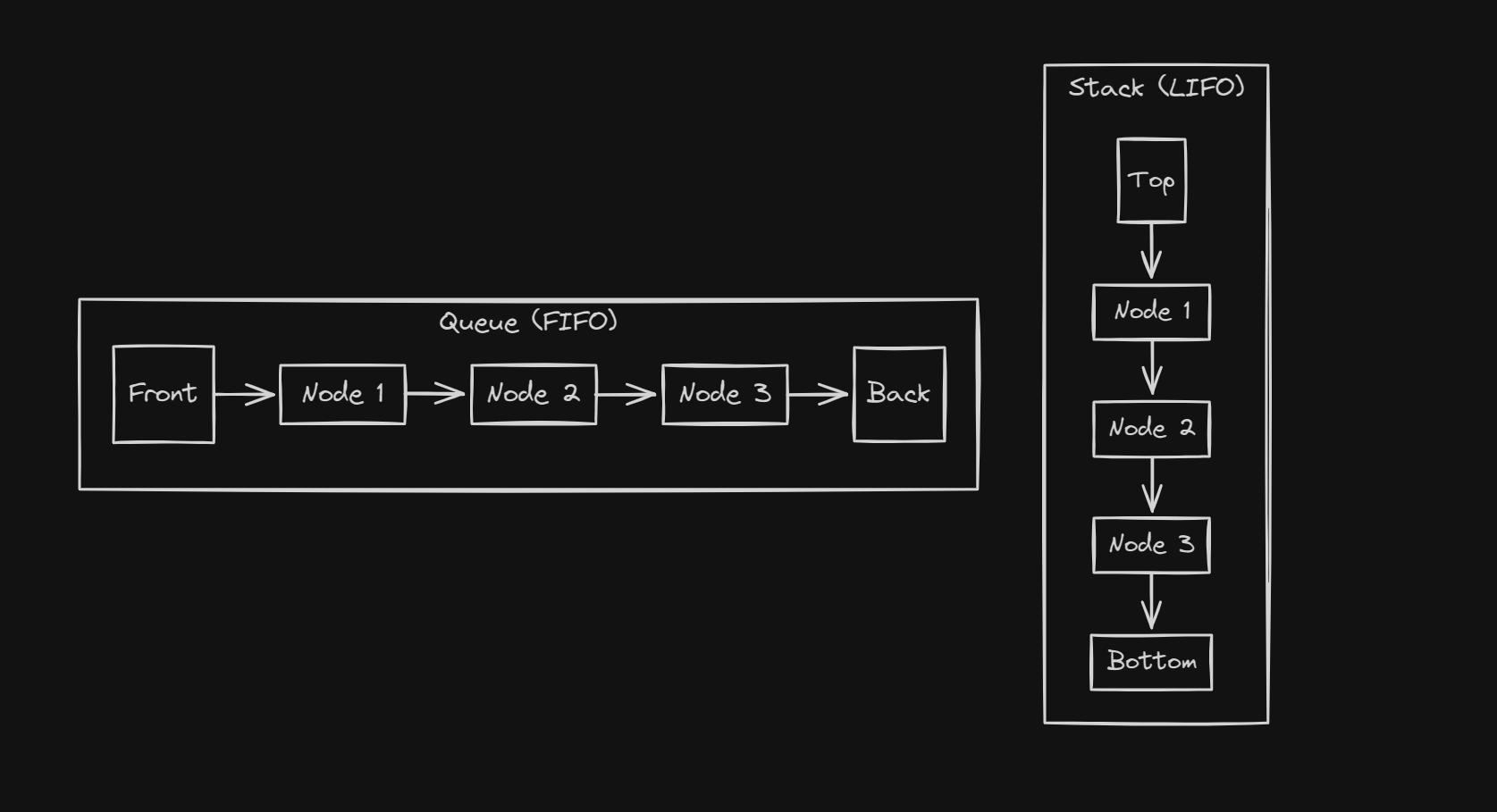
Stack
A stack is a Last-In, First-Out (LIFO) data structure where the last element added to the stack is the first one to be removed. Think of it as a stack of plates: you can only add or remove plates from the top.
Real-world example: Consider the undo feature in a text editor. Each action you perform (typing, deleting, etc.) gets added to a stack. When you hit "undo," the most recent action (the top of the stack) is reversed.
Queue
A queue is a First-In, First-Out (FIFO) data structure where the first element added to the queue is the first one to be removed. Think of it as a line in a supermarket: the first person who joins the line gets served first.
Real-world example: Ticketing systems often use queues. When customers arrive, they join the queue, and the first customer in line gets served next.
When to Use Each
Stack: Use a stack when you need to access elements in reverse order of their insertion, or when you need to implement functionalities like undo operations.
Queue: Use a queue when you need to process elements in the order they were added, such as in task scheduling or handling requests.
To conclude:
The discernment between stacks and queues is foundational for architecting efficient algorithms and robust data structures. By aligning the right tool with the task at hand, you embark on a journey towards optimizing performance and elevating the functionality of your applications to new heights.
2 min read
back to blog